
A Vital Lifeline in the Mountains
In the winding roads that connect Darjeeling’s scattered communities, time is often the difference between life and death. When medical emergencies strike in these remote Himalayan regions, access to blood can become a matter of urgent necessity—yet the mountainous terrain, limited healthcare infrastructure, and lack of awareness have historically created barriers to reliable blood supply.
This critical gap became painfully apparent during the COVID-19 pandemic, when Kalpavriksha Welfare Society (KWS) first formed as a grassroots response to community needs. Blood shortages reached crisis levels as regular donation patterns were disrupted and transportation challenges intensified.
“We saw patients’ families traveling for hours, sometimes crossing multiple districts in desperate searches for blood donors,” recalls Dr. Anand Sharma, a physician at Darjeeling District Hospital. “The pandemic exposed what had always been a fragile system.”
From Crisis Response to Sustainable Solution
What began as emergency blood donor mobilization during the pandemic has evolved into one of KWS’s most impactful initiatives. The Blood Donation Network now stands as a comprehensive approach to blood security in the region, addressing everything from donor recruitment to emergency response systems.
Key Achievements:
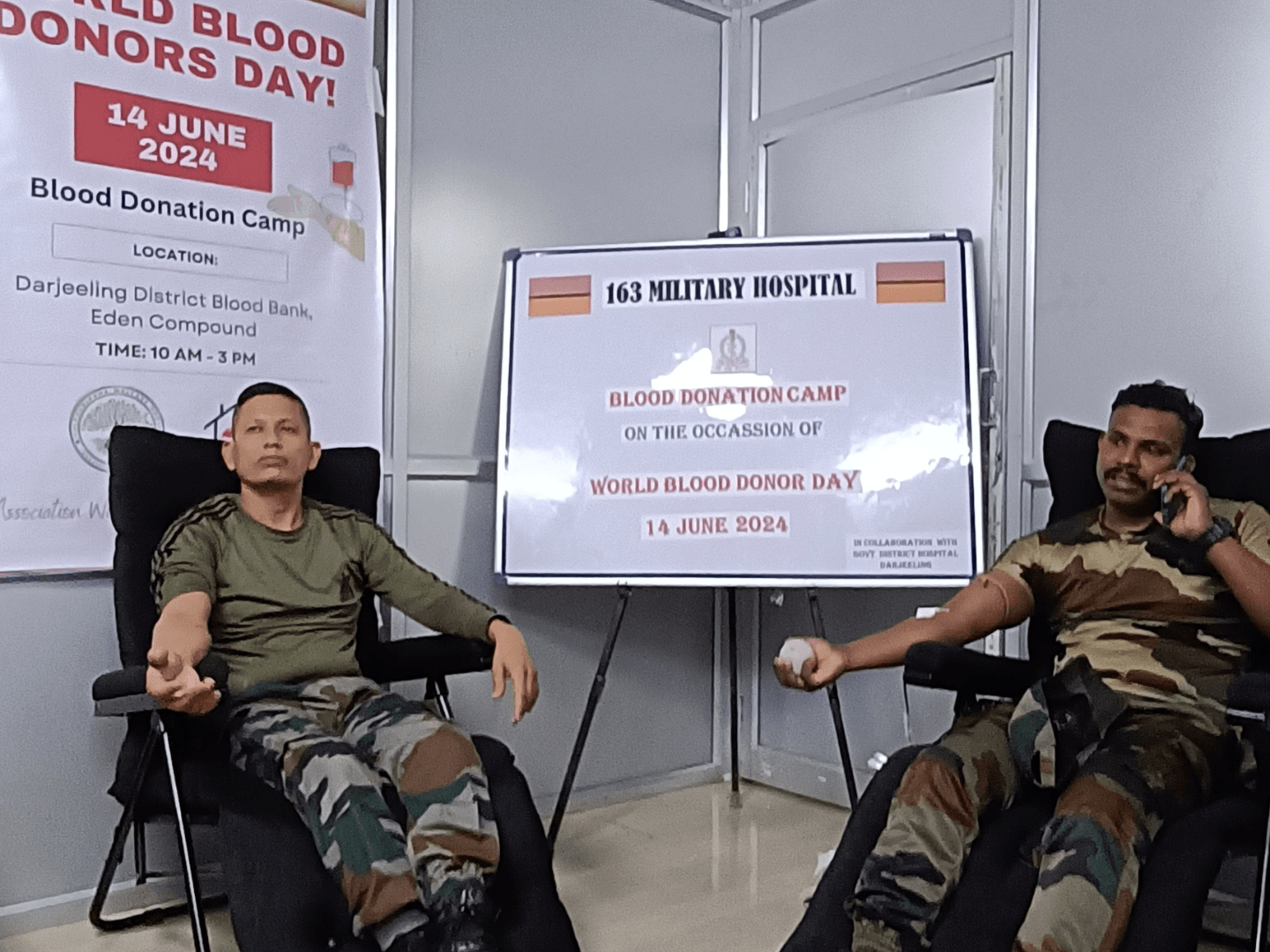
- Orchestrated 20+ strategic blood donation campaigns
- Mobilized over 500 donors to address critical shortages
- Established emergency blood availability systems in partnership with local hospitals
- Developed awareness campaigns that increased regular donor participation by 35%
But beyond these numbers lie the real impact: lives saved, families kept whole, and a community that has learned to care for its most vulnerable members.
Stories from the Frontlines: Heroes Among Us
The Teachers Who Created a Movement
When Rajesh Pradhan, a high school physics teacher in Kurseong, learned about blood shortages at the local hospital, he didn’t just donate himself—he transformed his entire school into a donation hub.
“I realized that many of my colleagues and senior students were eligible donors, but simply had never been asked,” Pradhan explains. “Working with KWS, we organized an awareness session, addressing fears and misconceptions. Our first school-based donation drive collected 43 units—enough to meet the hospital’s needs for nearly two weeks.”
The model proved so successful that KWS has now replicated it across 12 educational institutions, creating a sustainable donor pipeline and instilling the value of blood donation in young adults.
The Tea Garden Workers’ Collective
In the tea gardens that carpet Darjeeling’s hillsides, workers face both geographical isolation and economic challenges that can limit their access to healthcare. Yet when KWS approached the Makaibari Tea Estate about hosting a blood donation camp, the response was overwhelming.
“Initially, we worried about participation,” admits Sunita Rai, KWS’s Blood Donation Campaign Coordinator. “Instead, we found extraordinary generosity. Many workers shared that they rarely had money to donate to causes, but they could give blood—something even more precious.”
The Makaibari camp collected 76 units in a single day and sparked a movement across neighboring tea estates. Today, quarterly donation drives rotate through five major gardens, creating a reliable supply for patients in need.
The Emergency Responders’ Network
When eight-year-old Priya Tamang was severely injured in a landslide, doctors determined she needed an immediate transfusion. Her blood type—B negative—is rare in the region, appearing in less than 2% of the population. Before KWS’s intervention, finding matching donors during an emergency could take hours or even days.
“We received the call at 9:37 PM,” remembers Rohan Gurung, Emergency Response Coordinator at KWS. “Through our database of registered rare-type donors, we identified three potential matches within a 10-kilometer radius. By 10:15 PM, the first donor had arrived at the hospital. By midnight, Priya had received the blood she needed.”
This rapid response system, connecting pre-screened donors with emergencies through a simple SMS alert system, has reduced critical response time by over 60%.
Breaking Barriers: Addressing Donation Hesitancy
Creating a culture of regular blood donation in the region required overcoming deeply entrenched misconceptions. KWS’s awareness campaigns focus on three key strategies:
Myth-Busting Through Trusted Voices
Local religious leaders, traditional healers, and community elders have become powerful advocates for blood donation. By addressing cultural concerns and superstitions through respected community figures, KWS has effectively countered misinformation.
“Many people believed donating blood would permanently weaken them or transfer spiritual qualities,” explains Lama Tsering Dorjee, a Buddhist monk who now leads donation drives at his monastery. “By explaining both the science and the compassionate aspects of donation, we’ve helped our community understand this as an act of great merit.”
Celebrating Donors as Heroes
KWS’s “Heroes Among Us” recognition program elevates regular donors through public acknowledgment, certificates of appreciation, and community celebrations.
“Before, blood donors worked in the shadows,” notes Deepa Ghising, a five-time donor. “Now, I wear my donor pin proudly, and people stop me to ask about the experience. It’s become a source of community respect.”
Demonstrating Transparent Processes
Fear of the unknown prevented many potential donors from participating. KWS now conducts open demonstrations of the donation process, clear explanations of how blood is stored and used, and opportunities to tour blood bank facilities.
Building Sustainable Systems: Beyond Donation
While donation drives form the backbone of the program, KWS recognized that true blood security required systemic improvements:
Digital Donor Database
A searchable database of over 1,000 registered donors includes blood type, contact information, location, and donation history. This system enables both emergency mobilization and scheduled reminder notifications when donors become eligible to give again.
Transportation Network
Volunteer drivers stand ready to transport both donors to collection centers and blood products to patients in remote areas. This motorcycle fleet can navigate mountain roads even during monsoon season when larger vehicles cannot pass.
Cold Storage Improvements
Through partnerships with local businesses, KWS has helped equip three rural healthcare facilities with proper blood storage equipment, extending the reach of safe blood products beyond central hospitals.
Training for Healthcare Workers
Regular workshops train rural healthcare workers in appropriate blood product utilization, reducing waste and ensuring that collected blood serves as many patients as possible.
Looking Forward: The Community Health Resilience Program
Building on the success of the Blood Donation Network, KWS is now developing a comprehensive Community Health Resilience Program that will expand to address:
- Preventive healthcare education
- Mobile health clinics for remote villages
- Maternal-child health interventions
- First aid training in remote communities
“The blood donation network proved that community-based health solutions work,” says Sonam Wangdi, Executive Director of KWS. “With each donor who steps forward, with each village that hosts a donation drive, we’re not just collecting blood—we’re building a culture of mutual support that will sustain our community through future challenges.”
Become a Blood Donation Hero
The Kalpavriksha Blood Donation Network invites you to join our lifesaving community:
- Register as a donor in our emergency response database
- Organize a donation drive in your neighborhood, workplace, or school
- Support our transportation network with vehicle donations or volunteer drivers
- Fund cold storage equipment for remote health posts
- Share your donation story to inspire others
In the Himalayan tradition, kalpavriksha—the divine wish-fulfilling tree—grants life’s most precious gifts. Through blood donation, you can fulfill the most fundamental wish of all: the gift of continued life.