
The Himalayan Challenge: Preservation Amidst Change
The Eastern Himalayas, home to Darjeeling’s rolling hills and verdant valleys, stand among the world’s most biodiverse regions. These mountains don’t just frame our landscape—they are the source of life-giving water, clean air, and ecological balance for millions. Yet these fragile ecosystems face unprecedented threats from climate change, deforestation, unplanned development, and environmental degradation.
At Kalpavriksha Welfare Society (KWS), we recognized early that environmental conservation cannot be separated from community wellbeing. Named after the divine wish-fulfilling tree of Indian mythology, our organization embodies the interconnection between human prosperity and ecological health.
The Birth of Green Himalaya Initiative
When KWS formally registered in May 2022, the Green Himalaya Initiative became one of our cornerstone programs. Building on informal conservation efforts that began during the pandemic, this initiative takes a comprehensive approach to environmental stewardship that puts local communities at the center of both problem identification and solution creation.
“The Himalayas aren’t just mountains—they’re our identity, our livelihood, and our future,” explains Rohan Thapa, Environmental Program Coordinator at KWS. “We believe that those who live closest to these ecosystems understand them best and have the greatest stake in protecting them.”
Rooting Change: Our Tree Planting Campaign
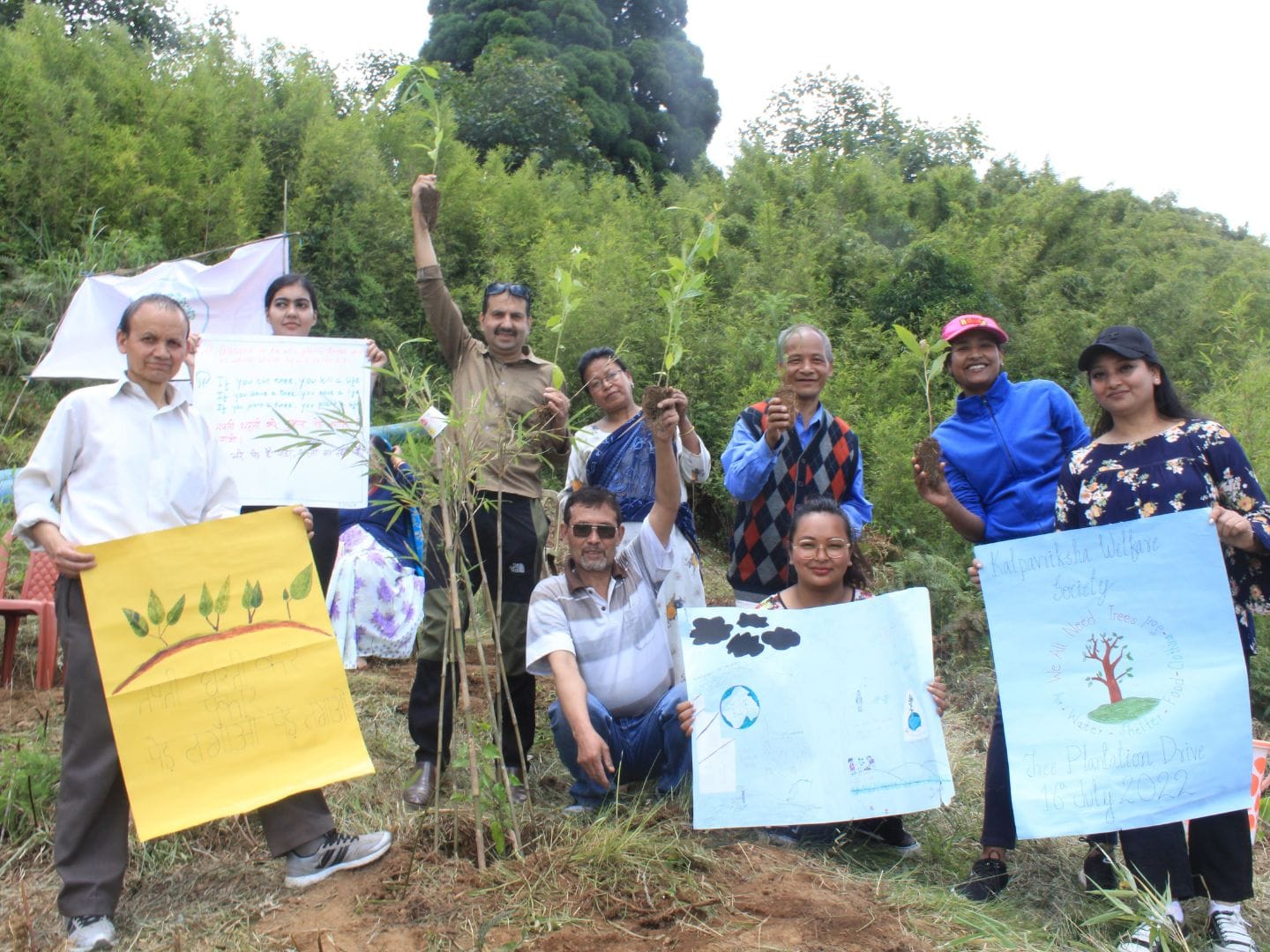
The most visible aspect of our Green Himalaya Initiative has been our ambitious tree planting campaign. To date, we’ve successfully planted over 1,000 native tree species across the Darjeeling region—each selected with purpose and planted with care.
Why Native Species Matter
Our approach prioritizes native tree species like Himalayan Oak, Rhododendron, Magnolia, and various indigenous fruit trees. Unlike exotic species that can become invasive, these native varieties:
- Are naturally adapted to local conditions and require less maintenance
- Support indigenous wildlife and pollinators
- Strengthen local biodiversity
- Often have cultural significance and traditional uses
- Contribute to watershed protection in ways exotic species cannot
Beyond Numbers: The Quality Approach
While many tree planting initiatives focus solely on quantity, our program emphasizes survival rates and long-term impact. Each planting site undergoes careful assessment, local species selection, and—most importantly—community engagement for ongoing care.
“We’re not just planting trees; we’re growing forests,” notes Pema Sherpa, a community volunteer. “The three-year monitoring program ensures that today’s saplings become tomorrow’s canopy.”
Community Ownership: The Key to Sustainability
The true innovation in our approach lies in how we’ve structured community ownership of conservation efforts:
Village Environmental Protection Committees
In each community where we work, locally elected Environmental Protection Committees oversee conservation activities. These committees:
- Identify vulnerable areas for restoration
- Mobilize community participation
- Monitor planted areas
- Enforce protective measures
- Serve as knowledge centers for sustainable practices
Green Guardians Youth Program
Understanding that long-term change requires engaging the next generation, our Green Guardians program involves school children and youth in conservation from an early age through:
- School-based tree nurseries
- Educational nature walks
- Citizen science monitoring projects
- Environmental arts and storytelling competitions
- Hands-on planting activities
Fourteen-year-old Nima Tamang, a Green Guardian from Lebong village, shares: “Before joining this program, I thought environmental protection was something only scientists did. Now I understand that everyone in our community has a role to play, including young people like me.”
Beyond Tree Planting: A Holistic Approach
While tree planting forms the foundation of our Green Himalaya Initiative, our environmental work extends to multiple interconnected areas:
Plastic Waste Reduction
Working with local businesses, we’ve pioneered plastic waste reduction campaigns that have:
- Established plastic-free zones in market areas
- Introduced eco-friendly packaging alternatives
- Created waste segregation systems
- Organized regular community clean-up drives
Climate Change Adaptation Education
Through workshops, demonstration sites, and farmer field schools, we’re helping mountain communities adapt to changing climate patterns by:
- Documenting traditional knowledge about weather prediction
- Introducing water conservation techniques
- Promoting climate-resilient agricultural practices
- Developing early warning systems for extreme weather events
Spring Rejuvenation
The Himalayan region’s natural springs—crucial water sources for local communities—have been drying up at alarming rates. Our spring rejuvenation program:
- Maps and documents traditional water sources
- Implements recharge techniques using traditional and modern methods
- Establishes community-based spring protection protocols
- Monitors water quality and quantity
Measuring Our Impact: Greener Hills, Stronger Communities
The impact of our Green Himalaya Initiative extends beyond environmental metrics to include social and economic benefits:
Environmental Indicators
- 1,000+ native trees planted with 85% survival rate
- 5 hectares of degraded land restored
- 3 natural springs rejuvenated
- 30% reduction in plastic waste in target communities
Social Indicators
- 12 Environmental Protection Committees established and active
- 200+ youth engaged as Green Guardians
- 15 traditional ecological knowledge practices documented and revitalized
- Increased community cooperation around shared environmental challenges
Economic Benefits
- Sustainable forest product harvesting providing supplemental income
- Eco-tourism potential developing in restored areas
- Reduced expenditure on water purchase in spring rejuvenation sites
- Green skills development creating new livelihood opportunities
Challenges and Lessons Learned
Our journey hasn’t been without obstacles. Limited resources, competing land-use pressures, and initial skepticism required us to adapt our approach. Key lessons include:
- The importance of demonstrating quick, visible wins to build momentum
- The need to integrate economic benefits with conservation goals
- The value of indigenous knowledge in developing effective interventions
- The power of involving children as catalysts for household behavior change
Looking Forward: Climate Resilience Program
Building on the success of the Green Himalaya Initiative, KWS is now developing an expanded Climate Resilience Program that will address:
- Sustainable water management across watersheds
- Organic farming practices adapted to changing climate conditions
- Renewable energy solutions tailored for mountain communities
- Community-based disaster risk reduction strategies
Join the Green Himalaya Movement
The preservation of Himalayan ecosystems isn’t just an environmental imperative—it’s essential for the continued wellbeing of our communities and the protection of our cultural heritage. You can support our efforts through:
- Volunteering for tree planting and monitoring activities
- Sponsoring native tree nurseries in schools
- Contributing to our spring rejuvenation fund
- Partnering with us on plastic waste reduction innovations
- Sharing traditional ecological knowledge for documentation
“The name Kalpavriksha represents a divine tree that fulfills wishes,” reflects Diki Bhutia, KWS founder. “Through our Green Himalaya Initiative, we’re working to ensure that these mountains continue to fulfill the wishes of generations to come—providing clean water, fresh air, biodiversity, and beauty for all who depend on them.”